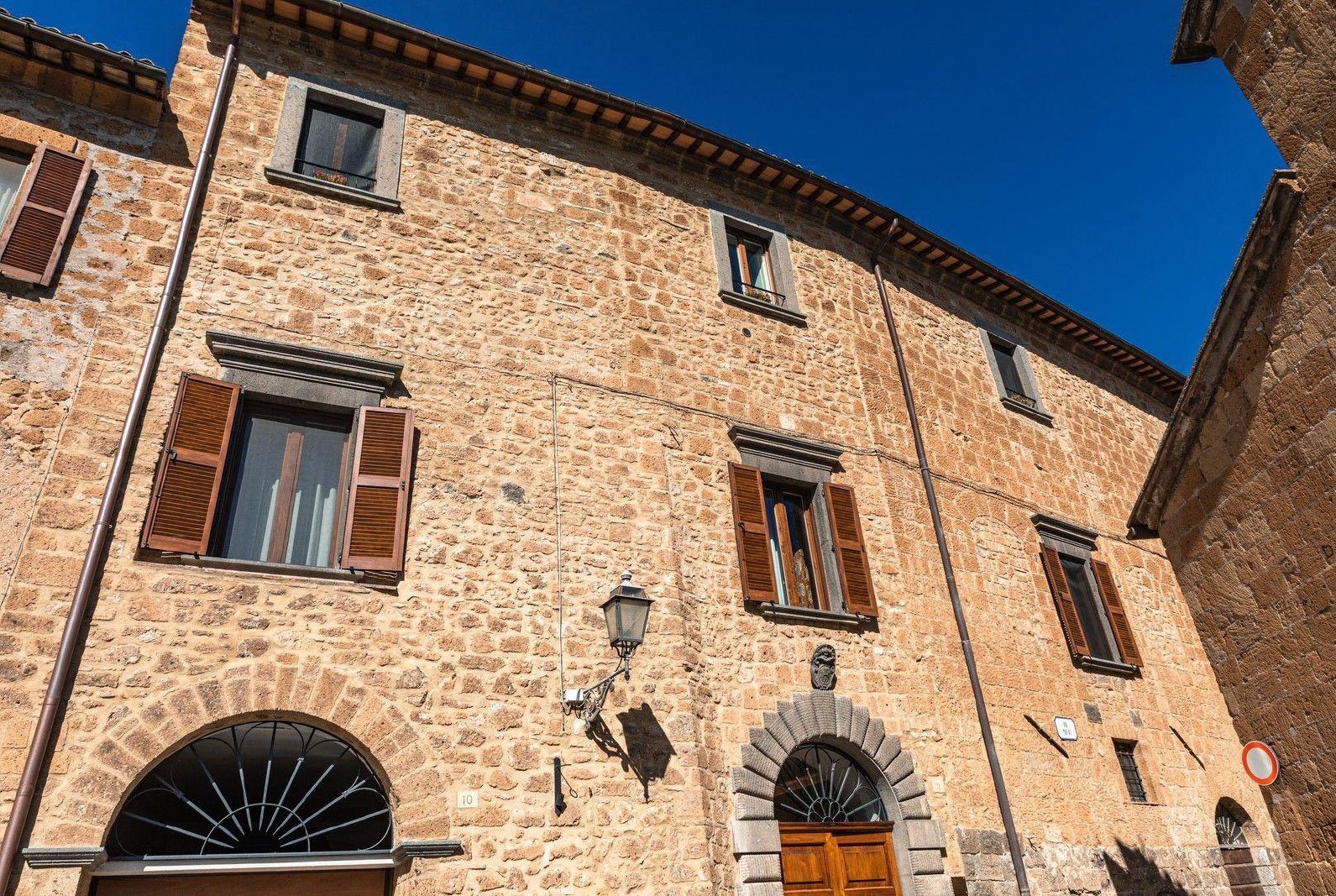
People often ask us when our house was built, and I usually answer, “Which part?”
The palazzo was not built at one moment in time so much as accumulated over centuries. Beneath it are grottoes carved into the volcanic rock some 2,500 years ago and used by the Etruscans. On the ground floor are medieval and Gothic structures, while the first-floor salons contain late medieval and Renaissance architectural elements dating back to the 1300s.
The main staircase and a newer wing came with a major renovation in the 1950s. We added the upper library about seven years ago, and access to the roof terrace is only a few years old. Even the rooms have changed identities over time.
When I write in the palazzo, I am usually in the dining room, which before the 1950s renovation was a bedroom, or in a small study tucked beside the original staircase. I often find myself thinking about all the people who lived and worked here before us, looking through these same windows at many of the same buildings: the cloistered convent next door, the Church of San Francesco, older even than Orvieto’s Duomo, and the rooftops and stone walls that have defined this part of the city for centuries.
Living in a historic palazzo gives you a peculiar sense that a house is never really finished. Each generation inherits it, adapts it, adds something of its own, and passes it forward. There is continuity here, but also growth – and somehow the two feel inseparable.